5 Everyday Defenses That Actually Cut Down Indoor Allergy Triggers
Quick Answer: The highest-impact indoor allergy defenses are allergen-proof bedding covers, weekly hot-water sheet washing, a HEPA air purifier in your bedroom, reducing carpet and soft furnishings in high-traffic rooms, and keeping humidity below 50% to limit dust mites and mold. Small, consistent habits beat occasional deep cleaning.
Most people picture a full allergy-proofing project as an overwhelming home renovation. In reality, five specific, manageable changes account for most of the reduction in everyday indoor allergen exposure.

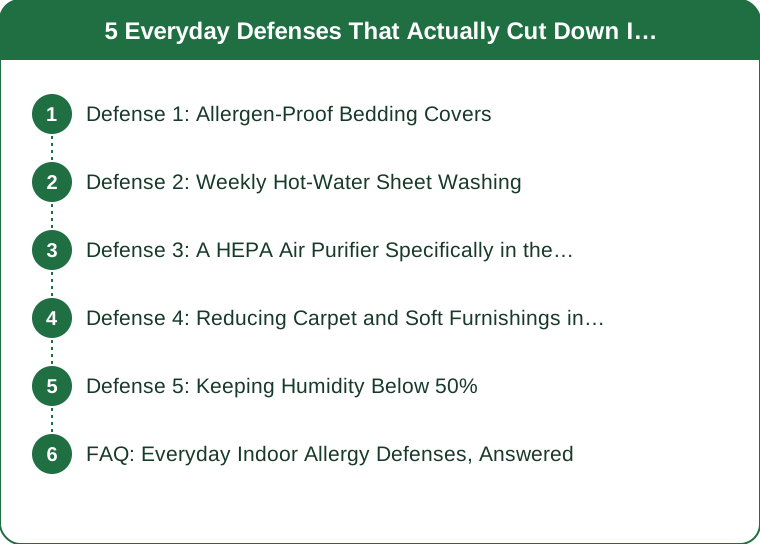
Defense 1: Allergen-Proof Bedding Covers
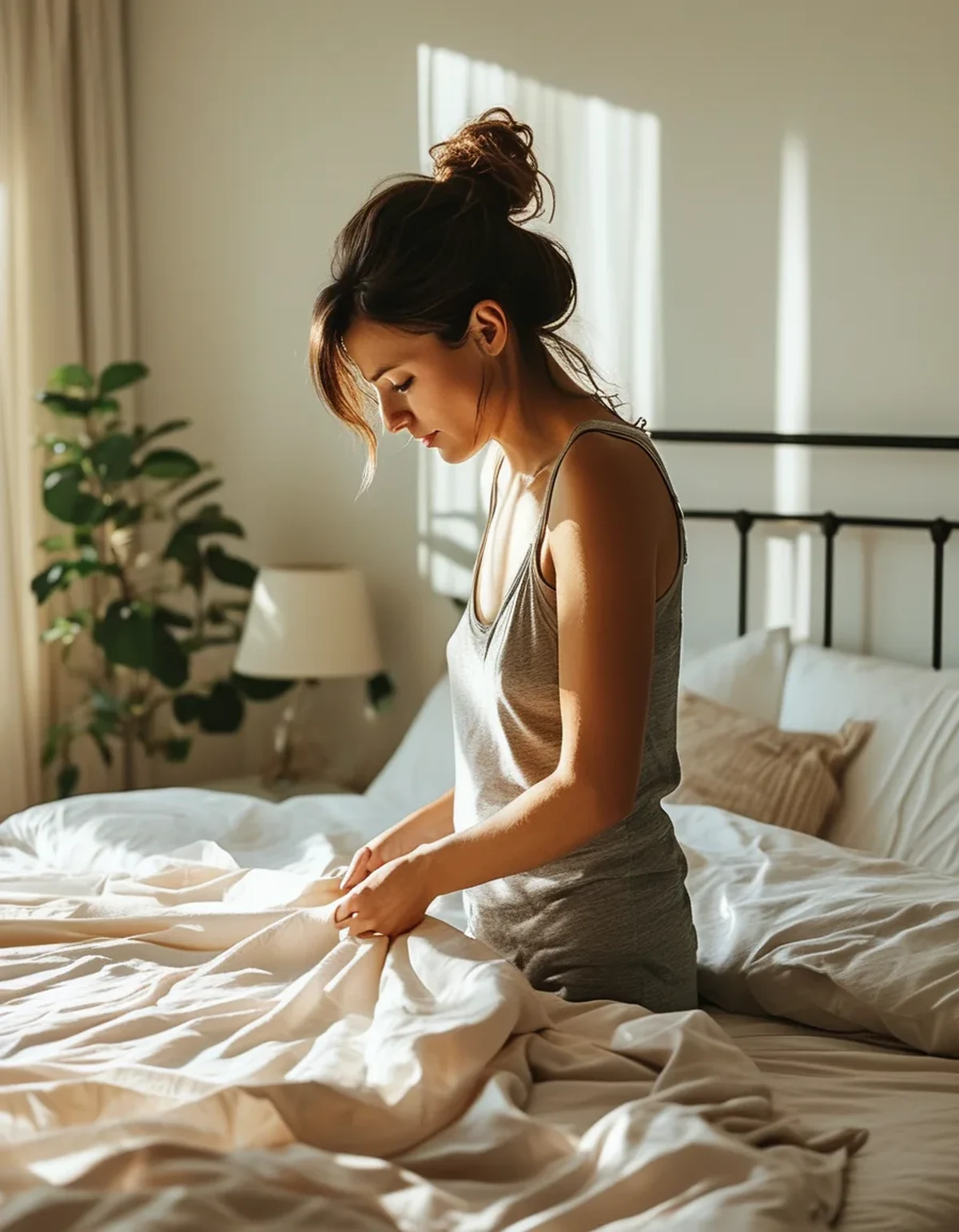
You spend roughly a third of your life in bed, making it one of the highest-exposure allergen zones in your home. Zippered, allergen-proof covers on your mattress and pillows create a physical barrier against dust mites — the single most common indoor allergen — without changing anything about how your bed feels or looks.
Defense 2: Weekly Hot-Water Sheet Washing
Dust mites are killed by heat, not detergent alone. Washing sheets weekly in water at least 130°F (54°C) is what actually reduces the mite population accumulating in bedding, whereas cooler washes leave much of it intact even with regular laundering.
Defense 3: A HEPA Air Purifier Specifically in the Bedroom
Air purifiers work best in the room where you spend the most concentrated, continuous time — for most people, that’s the bedroom overnight, not the living room. A true HEPA filter, run continuously in the bedroom, captures airborne allergens during the hours your exposure would otherwise be highest and least interrupted.
Defense 4: Reducing Carpet and Soft Furnishings in High-Traffic Rooms
Carpet, heavy curtains, and upholstered furniture trap allergens far more than hard flooring and washable fabrics. You don’t need to remove everything — swapping heavy curtains for washable ones and vacuuming carpet with a HEPA-filter vacuum weekly captures most of the benefit without a full flooring replacement.
Defense 5: Keeping Humidity Below 50%
Both dust mites and mold thrive above 50% relative humidity, making a simple humidity monitor and a dehumidifier in damp-prone rooms one of the most underused allergy defenses. This single environmental change addresses two major allergen sources — mites and mold — simultaneously.
FAQ: Everyday Indoor Allergy Defenses, Answered
Do I need to replace carpet entirely to see a real difference?
Not necessarily — consistent HEPA vacuuming can meaningfully reduce allergen load in existing carpet, though hard flooring remains the lower-maintenance long-term option for severe allergy sufferers.
How long does it take to notice a difference after starting these changes?
Many people notice improvement in sleep quality and morning congestion within 2-4 weeks of consistent bedding and air purifier changes, since bedroom exposure often has the most immediate effect.
Is a HEPA air purifier worth it if I already vacuum regularly?
Yes — vacuuming addresses settled allergens on surfaces, while an air purifier addresses airborne particles, and the two together cover a broader range of exposure than either alone.
TL;DR:
- Allergen-proof bedding covers and hot-water washing target dust mites directly
- A HEPA purifier does the most good in the bedroom, where exposure time is highest
- Reducing soft furnishings in high-traffic rooms cuts allergen accumulation
- Humidity control below 50% addresses both dust mites and mold at once
This is general information, not medical advice — talk to an allergist if symptoms persist despite these environmental changes.
Keep Reading
This article is for general informational purposes only and is not medical advice. Always consult a qualified health professional for guidance specific to you.