5 Fixes for an Allergy-Proof Car (Most People Only Do the First One)
Quick Answer: Beyond keeping windows up, replacing the cabin air filter every 12,000 miles, running AC on recirculate during high-pollen hours, and vacuuming seats weekly cut far more allergen exposure than windows alone — the cabin filter especially is the most overlooked fix.
Most allergy advice for cars stops at ‘keep the windows closed,’ which helps but leaves several bigger sources of in-car allergen exposure completely unaddressed.

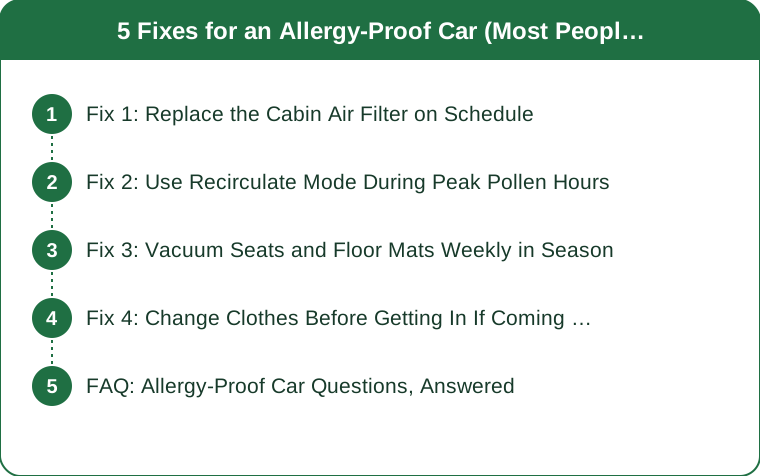
Fix 1: Replace the Cabin Air Filter on Schedule
The cabin air filter is a separate part from the engine air filter and is easy to forget entirely — many drivers have never replaced it. A clogged filter both lets more allergens through and recirculates what it’s already trapped.
Check it every 12,000 miles or once a season during high pollen months; it’s usually a simple DIY swap behind the glovebox on most vehicles.
Fix 2: Use Recirculate Mode During Peak Pollen Hours
Pollen counts peak roughly 5am-10am, so switching the AC/heat to recirculate rather than fresh-air intake during that window meaningfully cuts how much outside pollen enters the cabin. Switch back to fresh air intake outside peak hours to avoid stale cabin air buildup.
Most cars have a small recirculate icon (looped arrow) on the climate control — it’s worth confirming yours is actually engaging correctly.

Fix 3: Vacuum Seats and Floor Mats Weekly in Season
Fabric seats and floor mats trap pollen and dust that gets kicked back into the air every time you sit down or shift your feet. Weekly vacuuming during high pollen season removes a source of ongoing exposure that windows-up alone doesn’t touch.
A handheld vacuum with a HEPA filter is more effective here than a standard shop vac, since it won’t just recirculate fine particles back into the cabin air.
Fix 4: Change Clothes Before Getting In If Coming From Yard Work
Pollen clings to clothing and hair after outdoor activity, and gets transferred directly into car upholstery the moment you sit down. A quick outer-layer change after yard work or a walk during high pollen days keeps that transfer from happening in the first place.
This matters more than people expect — upholstery holds onto transferred pollen far longer than a quick wipe-down removes it.
FAQ: Allergy-Proof Car Questions, Answered
How do I know if my cabin air filter needs replacing?
Reduced airflow from vents, a musty smell when the AC first kicks on, or simply not knowing the last replacement date are all signs it’s overdue — check behind the glovebox for the housing.
Does leather upholstery trap less pollen than fabric seats?
Generally yes — leather is easier to wipe down and doesn’t hold particles in fibers the way fabric does, though it still needs regular cleaning.
Is recirculate mode bad to run constantly?
Running it constantly can lead to stale air and fogged windows over time — it’s best used specifically during peak pollen hours, not as a permanent setting.
TL;DR:
- Cabin air filter replacement is the most overlooked fix — check it every 12,000 miles
- Use recirculate mode specifically during 5am-10am peak pollen hours
- Vacuum fabric seats and mats weekly in season with a HEPA vacuum
- Change clothes before getting in the car after yard work or outdoor activity
Windows up is step one of five — the cabin filter alone often makes a bigger difference than people expect.
Keep Reading
This article is for general informational purposes only and is not medical advice. Always consult a qualified health professional for guidance specific to you.