Your Car Might Be Your Worst Allergy Trigger — Here's the Fix
Quick Answer: A cabin air filter clogged with pollen and dust recirculates allergens every time you run the AC. Replace it every 12,000-15,000 miles, keep windows up during high pollen days, and run AC on recirculate mode near traffic.
You’ve done the bedroom pillow covers and the kitchen deep clean, but the sneezing still hits hardest during your commute. Most people never think to check the one filter doing the least amount of work: the one in their car.

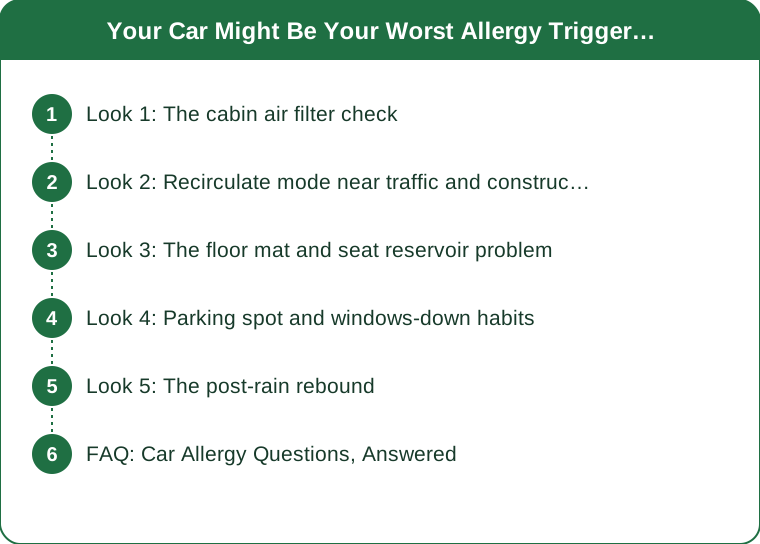
Look 1: The cabin air filter check
Most cars have a cabin air filter behind the glovebox that’s rarely mentioned in routine maintenance. A filter overdue for replacement doesn’t just filter poorly — it can actively blow trapped pollen and mold spores back into the cabin every time the fan runs. Check your manual for location and replace every 12,000-15,000 miles, sooner if you live somewhere with high pollen counts.
Look 2: Recirculate mode near traffic and construction
Switching your AC to recirculate mode pulls air from inside the cabin instead of outside, cutting down on pollen and exhaust particles pulled in from traffic or roadside construction. Use fresh-air mode only when the car needs to clear out its own stale air, then switch back to recirculate for the rest of the drive.
Look 3: The floor mat and seat reservoir problem
Pollen tracked in on shoes settles into floor mats and fabric seats, then gets kicked back into the air every time you get in and move around. A monthly vacuum of mats and seats — not just a wipe-down — actually removes the reservoir instead of just disturbing it.

Look 4: Parking spot and windows-down habits
Parking under trees during high pollen season coats your car in a visible yellow layer that gets pulled straight into the cabin on your next drive. On high pollen count days, keep windows up even for short trips, and check a pollen forecast app before deciding to air the car out.
Look 5: The post-rain rebound
Right after rain, mold spore counts often spike as moisture triggers a release from wet leaves and soil. This is a commonly overlooked window — many allergy sufferers relax right after a rain, assuming pollen washed away, while mold spores are doing the opposite.
FAQ: Car Allergy Questions, Answered
How often should I replace my car’s cabin air filter for allergies?
Every 12,000-15,000 miles for most drivers; every 6 months if you have significant seasonal allergies or drive frequently through high-pollen areas.
Is recirculate mode always better for allergies?
During high pollen days and in traffic, yes. Switch to fresh air periodically on clear, low-pollen days to avoid excess humidity buildup inside the cabin.
Can a car air purifier help with allergies?
A small HEPA-filter car purifier can help between filter changes, though it’s a supplement to — not a replacement for — a properly maintained cabin air filter. This is general information, not medical advice.
TL;DR:
- Check and replace your cabin air filter every 12,000-15,000 miles
- Use recirculate mode in traffic and on high pollen days
- Vacuum floor mats and seats monthly, not just wipe them
- Watch for the post-rain mold spore spike, not just pollen
Your car is a sealed box that recirculates whatever gets trapped in it — a few small habits keep that box from working against you.
Keep Reading
This article is for general informational purposes only and is not medical advice. Always consult a qualified health professional for guidance specific to you.