Exercising Through Allergy Season: The Athlete's Pollen Playbook
Quick Answer: Pollen counts typically peak from early morning through midday on dry, breezy days — exactly when most people run. Train after rain or in the late evening on calm days, wear wraparound sunglasses and a cap, and shower with a hair wash promptly afterward. Move hard sessions indoors on high-count days. Wheezing or chest tightness during exercise is a doctor conversation, not a toughness test.
Allergy season presents active people with a genuinely rude choice: skip the outdoor training you actually enjoy, or spend it sneezing into your own elbow at kilometer three.
This playbook rejects both. With timing windows, route intelligence and a ten-minute decontamination habit, most training survives pollen season more or less intact.
(If you get asthma-adjacent symptoms during exercise, that’s a doctor conversation first — see the note at the end.)
When Is Pollen Lowest During the Day?
This is the highest-leverage change you can make, and it costs nothing.
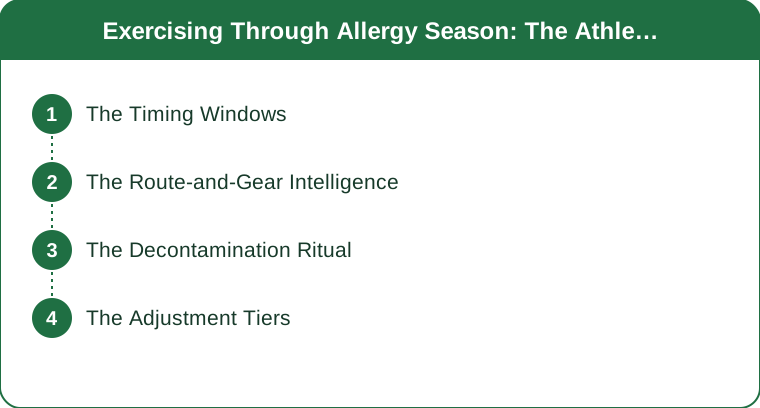
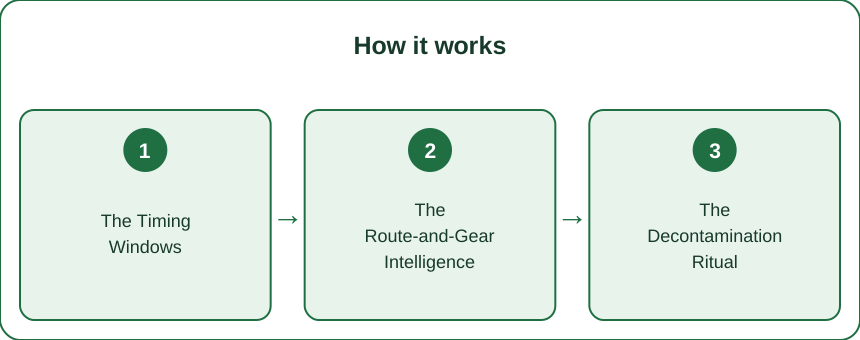
Counts generally peak from early morning through midday on dry, breezy days. The classic grass-pollen surge lands roughly 5-10 a.m., which is — of course — exactly when runners run. Genuinely unfortunate scheduling by the plant kingdom.
The good windows:
- After rain. The air gets rinsed. A post-shower evening run is allergy season’s single best gift, and the day after a thunderstorm is often excellent.
- Late evening on calm days, once counts have settled and wind has dropped.
- High humidity, no wind conditions generally.
The bad windows:
- Dry, warm, breezy mornings — the trifecta
- Windy afternoons that stir settled pollen back up
Pollen forecast apps make this checkable. Treat the count the way you’d treat a rain forecast: it changes what you do, not whether you do it. High count + dry + windy = the treadmill’s day, and that’s a tactical decision rather than a defeat.
One useful note: some people find thunderstorms worse rather than better, because storms can fragment pollen grains into smaller particles that reach deeper into the airways. If storms reliably set you off, the after-rain rule may not be yours.
How Do You Reduce Exposure While Training Outside?
Exposure engineering, in rough order of usefulness:
- Routes have seasons. Waterfront, urban and paved routes generally carry less pollen than a meadow trail at peak grass season. Your beautiful park path has a few weeks a year when it’s the wrong choice.
- Sunglasses are pollen goggles. Wraparound sport shades meaningfully cut what reaches your eyes, which is where a lot of the misery originates.
- A cap keeps pollen out of your hair, where it otherwise commutes home with you and moves into your pillow.
- Nasal breathing filters better than mouth-gasping. Your nose is a functioning filter; your open mouth isn’t. Another argument for keeping easy days genuinely easy during peak weeks.
- A buff or light neck gaiter pulled up on the worst days helps some people. It looks slightly odd. It works.

The Post-Training Decontamination Ritual
This is the part people skip, and it’s why their evenings are worse than their runs.
You come home carrying a pollen payload on skin, hair, clothes and shoes. If you don’t deal with it, you spend the next four hours re-exposing yourself in your own living room.
The ten-minute protocol:
- Shoes off at the door. They’ve been in the grass.
- Training clothes straight to the hamper — not the bedroom chair, which is a pollen reservoir that quietly ruins your sleep.
- Shower promptly, and wash your hair. Hair is a pollen sponge, and your pillow is directly downstream of it. This is the step that changes people’s nights.
- Rinse your sinuses if you’re a saline person. It’s cheap and reasonably well supported. Use distilled or previously boiled water, never straight tap.
- Wash the cap. Sweaty and pollen-loaded is a combination that needs laundering far more often than people do it.
Ten minutes buys you the evening back. It’s the best return on time in this entire article.
Kit note: this ritual is much easier when your training clothes are things you can strip off and throw in the wash without thinking. A simple set — a fitted top and a pair of high waist leggings you’ll happily run through the machine after every session — beats anything you’re inclined to “wear one more time” in the middle of grass season.
What Nobody Tells You About Training Through Allergy Season
Pre-medicating works better than rescuing. Antihistamines and nasal sprays generally work best taken consistently before symptoms rather than in response to them, and nasal steroid sprays in particular take days to reach full effect. Your pharmacist can tell you what applies to your specific medication in about ninety seconds.
Some antihistamines make training feel harder. Older sedating ones especially. If your easy runs suddenly feel dreadful in April, the medication is worth considering alongside the pollen.
Allergy symptoms genuinely degrade sleep, and poor sleep degrades training. A chunk of what feels like “allergy season makes me slow” is actually “allergy season makes me sleep badly.”
Exercise-induced symptoms are a separate thing from hay fever. Coughing, wheezing or chest tightness that appears during or shortly after exercise isn’t just pollen being annoying — it can indicate exercise-induced bronchoconstriction, which is common and treatable but needs a diagnosis.
The season is weeks. Your fitness is years. A few strategic indoor days is maintenance, not surrender, and nobody has ever lost a season to three treadmill sessions.
How Should You Adjust the Training Itself?
- Move hard sessions indoors on peak days. Intervals mean heavy mouth-breathing and maximum air volume through your airways — the worst possible exposure profile. Easy outdoor days involve far less gasping.
- Keep easy days outdoors when counts allow, since nasal breathing at conversational pace filters well.
- Pre-medicate per your usual plan, before symptoms rather than after.
- Downshift rather than stop during rough weeks. Volume can stay; intensity can wait.
- Respect the asthma line. Wheezing and chest tightness during exercise is a medical question, not a toughness test.
When to see a professional: see a doctor if you get wheezing, chest tightness, persistent coughing or shortness of breath during or after exercise; if symptoms don’t respond to over-the-counter treatment; if they’re significantly affecting your sleep or daily function; or before starting any new allergy medication if you take other prescriptions. Get emergency help for severe breathing difficulty. An allergist can also identify what you’re actually reacting to, which turns this whole playbook from general advice into a specific calendar.
FAQ
What time of day is best to exercise with pollen allergies?
Late evening on calm days, or any time shortly after rain, when counts are typically lowest. Early morning through midday on dry, breezy days is usually the worst window — which unfortunately overlaps with when most people prefer to train.
Does wearing a mask help with pollen while running?
It can reduce what you inhale, and some people find it genuinely helpful on high-count days. The trade-off is breathing comfort during harder efforts, so it tends to work better for easy runs than intervals. Sunglasses and a cap are lower-friction wins to try first.
Should I stop exercising during allergy season?
Almost never necessary. Adjusting timing, routes and where you do your hard sessions handles most of it. The exception is exercise that triggers breathing symptoms — wheezing or chest tightness means see a doctor before continuing, not train through it.
TL;DR
- Pollen peaks early morning to midday on dry, breezy days. Train after rain or late evening on calm days.
- Check the count like you check the rain forecast — it changes what you do, not whether you do it.
- Wraparound sunglasses, a cap, paved routes, nasal breathing on easy days.
- Decontaminate within ten minutes: shoes off, kit in the hamper, shower including hair.
- Hard sessions indoors on peak days. Gasping is the worst exposure profile there is.
- Pre-medicate before symptoms, and treat wheezing or chest tightness as a doctor’s question.
Keep Reading
This article is for general informational purposes only and is not medical advice. Always consult a qualified health professional for guidance specific to you.