5 Entryway Habits That Decide How Much Pollen Lives in Your House
Quick Answer: Outdoor pollen does not stay outdoors. It rides in on shoes, clothing, hair, bags, and pets, and then settles on soft furnishings where you re-disturb it for days. Five entryway habits handle most of it: shoes off at the door, an outdoor-clothes hook that is not your bedroom, a doormat system that actually traps particles, hair and hands dealt with before you sit down, and a pet wipe-down routine. During ragweed season - which runs through much of late summer and autumn in most of the US - these are the highest-leverage changes available at home.
You take the medication. You keep the windows shut. And you still wake up congested, because every evening you carry the entire day’s pollen exposure through the front door and distribute it across the sofa.
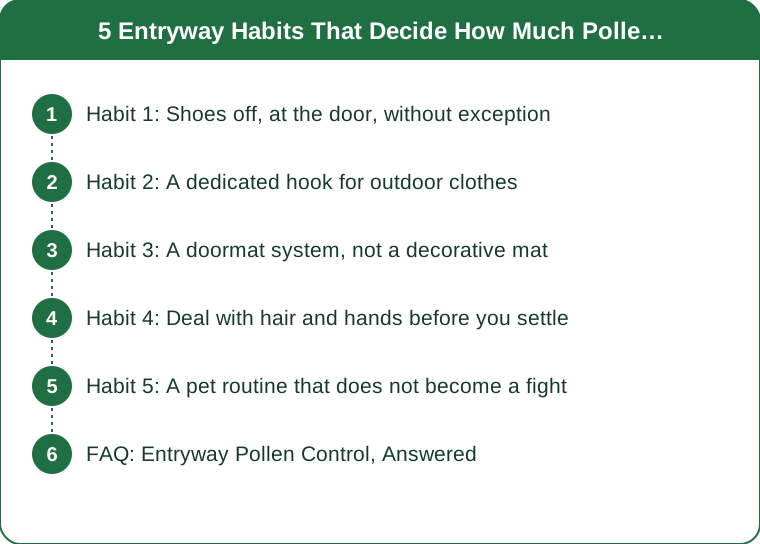
Habit 1: Shoes off, at the door, without exception
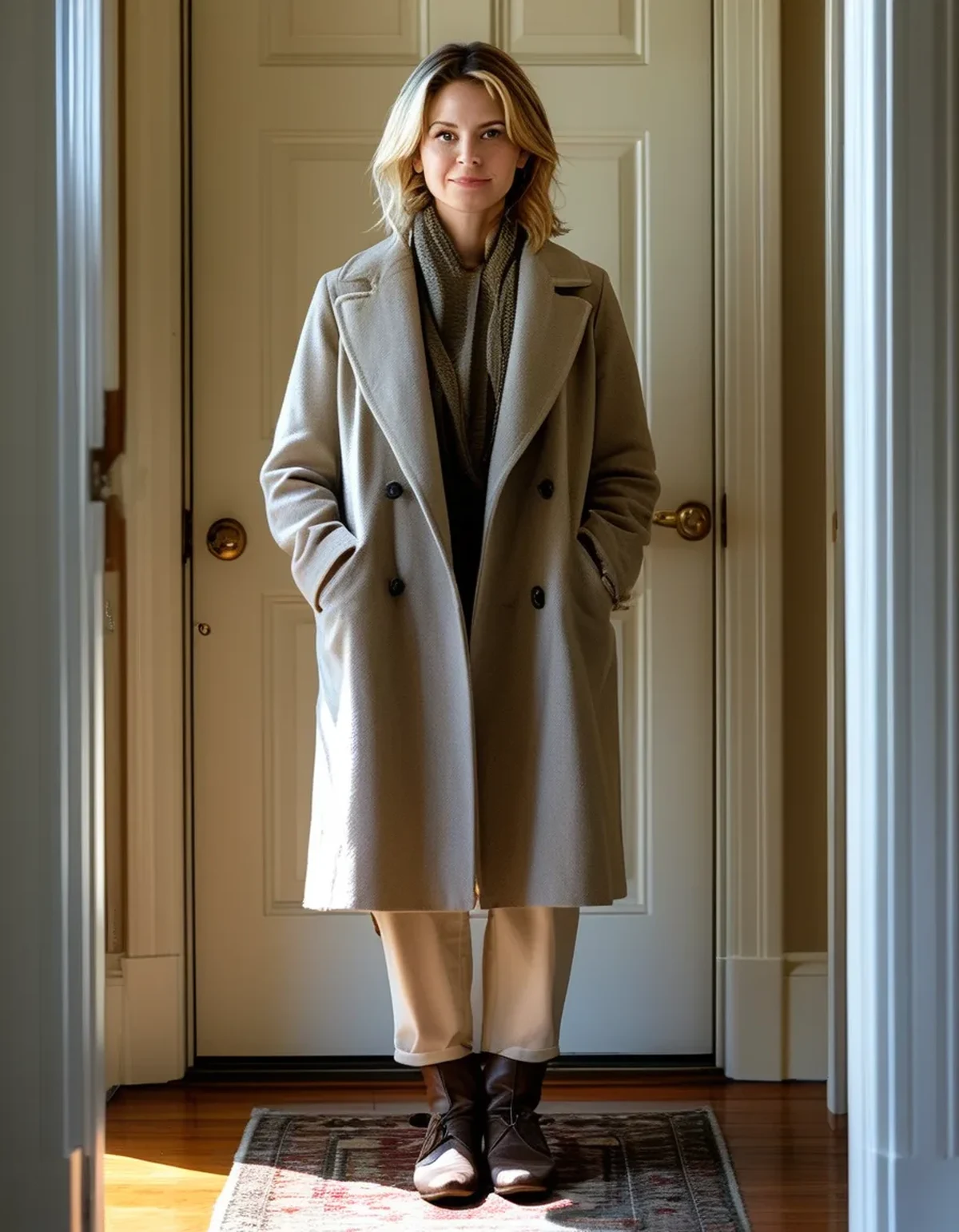
Shoes are the single largest transport route for outdoor particles. They pick up pollen from grass, paths, and car floors, and then deliver it to every room you walk through - including carpet, which is an excellent reservoir and a poor one to clean.
The rule fails on convenience, not belief. Almost everyone agrees with shoes-off and then breaks it when they run back in for keys. A bench or a chair right at the door is what makes it stick, because most of the failure is that taking shoes off standing up is annoying.
Store them at the door, not in a bedroom closet. Carrying the shoes through the house solves nothing. A rack, a basket, or a cupboard in the entry is the whole point.
Keep a pair of house shoes at the door if bare floors bother you. This also removes the excuse of running in for a moment, because there is something to put on immediately.
And extend the rule to bags. A tote or gym bag that lives on the floor of an office, a car, and a train picks up plenty and then gets put on a kitchen counter or a bed. Give bags a hook or a shelf at the door too.
Habit 2: A dedicated hook for outdoor clothes
Coats and jackets carry pollen in their fibers, and they are the layer with the most outdoor exposure. Hanging them in a bedroom - or over the back of a dining chair - moves the day’s collection to exactly the places you spend most time.
Set up one hook or a closet at the entry that is only for outdoor layers. Nothing complicated: the physical separation is the mechanism.
Change out of the day’s clothes before sitting on soft furnishings. This is a bigger deal than it sounds during high pollen weeks, because upholstery and beds hold particles and re-release them when disturbed. Anyone whose symptoms are worst in the evening on the sofa or at night in bed should try this first.
Do not shake clothes out indoors. Shaking is efficient at putting settled particles back into the air you are about to breathe. Leave them hanging.
Wash outdoor layers more often during peak season, and dry them inside. Line-drying laundry outdoors during high pollen counts is one of the most reliable ways to bring a large dose of allergen into a wardrobe, which is a genuinely counterintuitive point for anyone who prefers air drying.
Habit 3: A doormat system, not a decorative mat
One mat does not do it. The effective approach is two: a coarse, scraping mat outside the door to remove the bulk, and an absorbent, washable mat inside to catch what remains.
The inside mat has to be washable and actually washed. An unwashed indoor mat becomes a reservoir rather than a trap, and during ragweed season it is worth laundering weekly.
Size matters more than material. A mat long enough for several steps captures dramatically more than a small square, because most transfer happens over the first few paces.
Vacuum the entry area more often than the rest of the house. A vacuum with a HEPA filter matters here specifically, because a poor filter redistributes fine particles as it works.
And close the door promptly. A propped door during a high-count afternoon lets in far more airborne pollen than a few trips in and out. If you are carrying shopping in, it is worth the extra ten seconds.

Habit 4: Deal with hair and hands before you settle
Hair is an efficient pollen collector, and it delivers directly to your pillow. For anyone with evening or overnight symptoms, washing hair before bed during peak season is one of the highest-yield single changes available - and a lot of people discover their worst nights are simply hair-related.
Rinse your face and hands when you come in. Pollen on the face ends up in the eyes, and pollen on hands ends up there too via a dozen unconscious touches. A quick rinse at the door - or at least before you touch your face - is straightforwardly effective.
Consider changing pillowcases more frequently during peak weeks. The pillow is where the greatest concentration of face-to-fabric contact happens over the longest period.
Wear sunglasses outside during high counts. They act as a mechanical barrier for the eyes, which is where symptoms are frequently worst and hardest to medicate away.
And time outdoor activity where you can. Pollen counts vary through the day and by species, and ragweed in particular tends to peak in the morning in many regions. Checking a local count before deciding when to run is a small habit with an outsized effect on how the rest of the day goes. This is general information, not medical advice - persistent or severe symptoms deserve a proper assessment.
Habit 5: A pet routine that does not become a fight
Pets that go outside come back carrying pollen in their coats, and they then distribute it onto exactly the furniture and bedding you use most. This is a common and frequently overlooked route, especially for people who assume their symptoms are a pet allergy when they are actually a pollen delivery problem.
Wipe down with a damp cloth at the door. Not a bath - a quick wipe over the coat, focused on the back and legs. Damp is the operative word, since dry brushing indoors aerosolizes what you are trying to remove.
Do the brushing outside, during peak season. Same reasoning, and it takes no additional effort once it becomes the default.
Wash pet bedding weekly during high count weeks, and keep pets off the human bed if symptoms are meaningful. The bed is the highest-value real estate to protect because of the hours of contact involved.
Wash your hands after handling the pet. Straightforward, and it closes the loop between the coat and your eyes.
And be honest about which problem you have. If symptoms persist year-round rather than tracking the pollen season, that pattern points somewhere else - dust mites, mold, or an animal allergy - and it is worth proper testing rather than more guessing. This is general information, not medical advice.
FAQ: Entryway Pollen Control, Answered
Does taking shoes off really reduce indoor allergens?
Shoes are a major transport route for outdoor particles including pollen, and removing them at the door prevents distribution through the house - particularly onto carpet, which holds particles and releases them when disturbed. It is one of the simplest high-yield changes available.
Should I shower before bed during allergy season?
Many people find it helps significantly, especially washing hair, because hair collects pollen through the day and then transfers it to the pillow for eight hours. If your symptoms are worst overnight or first thing, this is the change to try first.
Can I dry laundry outside during pollen season?
It is best avoided during high counts - wet fabric hung outdoors collects a substantial amount of airborne pollen and brings it straight into your wardrobe and bed. Drying indoors or in a dryer during peak weeks is the safer approach.
How do I stop my pet bringing pollen inside?
Wipe the coat with a damp cloth at the door rather than dry brushing indoors, brush outside, wash pet bedding weekly during peak season, and keep pets off beds if symptoms are significant. Damp wiping avoids putting particles back into the air.
TL;DR:
- The front door is the main allergen route into a house, and shoes, coats, hair, bags, and pets are the carriers.
- Shoes off at the door with a bench to make it easy, and a dedicated entry hook for outdoor layers, handle most of the transfer.
- Use two mats - a coarse scraper outside and a washable absorbent one inside - and actually launder the indoor one weekly during peak season.
- Wash hair before bed and rinse hands and face at the door; hair delivers a day of pollen directly to your pillow.
- Damp-wipe pets at the door rather than dry brushing indoors, and avoid drying laundry outside during high counts.
Medication treats the reaction. These five habits reduce the dose - and during ragweed season, cutting the dose is the part you can control. This is general information, not medical advice.
Keep Reading
This article is for general informational purposes only and is not medical advice. Always consult a qualified health professional for guidance specific to you.