5 Late-Summer Allergy Triggers Hiding in Your Gym
Quick Answer: Ragweed pollen season begins in mid-August across most of the US and peaks in early to mid-September, and exercise makes allergic symptoms more noticeable because you breathe more air, breathe it through your mouth, and breathe it deeper. Five gym-specific factors compound it: propped doors, floor-level dust disturbance, chlorine byproducts in pool areas, mold in damp equipment, and pollen carried in on other people. Timing your sessions and rinsing after helps more than most people expect.
Your allergies were fine in July. It is now the third week of August and every session ends with a scratchy throat and a blocked nose. Here is what changed, and where it is coming from.

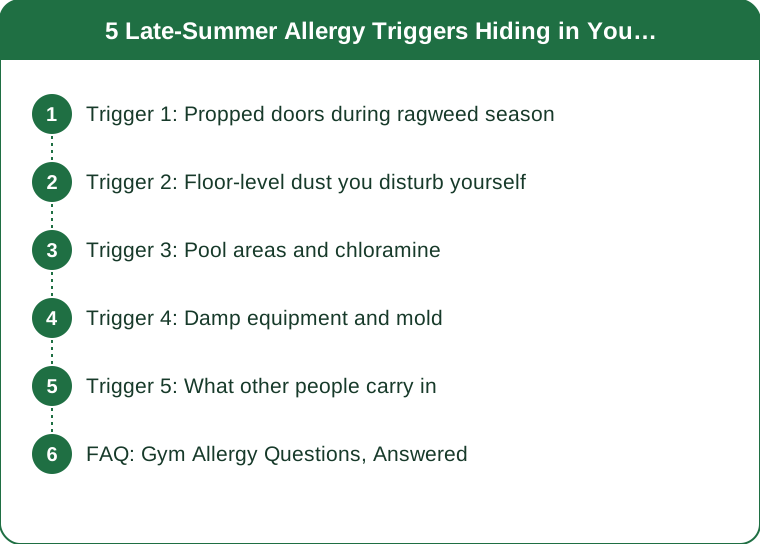
Trigger 1: Propped doors during ragweed season
What is happening: Ragweed pollen counts peak between roughly 10 am and 3 pm on warm, dry, breezy days, and pollen grains travel remarkably far - hundreds of miles in some conditions. A gym that props its doors open on a pleasant late-August morning is running an efficient pollen intake system.
Why exercise amplifies it: At rest you move roughly 6 liters of air per minute. During moderate exercise that rises to 40 or 50, and higher during hard intervals. You are simply exposed to far more of whatever is in the air, and mouth breathing bypasses the nasal filtering that normally traps a substantial share of larger particles.
What to do: Train early morning or evening when counts are lower, and prefer sessions in rooms without exterior doors during the peak weeks. Checking a local pollen forecast takes ten seconds and genuinely changes which day you do your hard session.
A note on outdoor training: Immediately after rain is usually the best window, as rain clears airborne pollen. The exception is thunderstorms, which can rupture pollen grains into smaller fragments and briefly worsen symptoms for some people.
Trigger 2: Floor-level dust you disturb yourself
What is happening: Dust mite allergen, skin cells, and settled pollen accumulate in mats, carpet, and equipment padding. Burpees, floor work, and stretching all put your face inches from a surface you have just disturbed.
Why it hits during specific exercises: The concentration of allergen in your breathing zone rises sharply when you are prone or supine on a mat, and it rises again when the movement itself agitates the surface. People often notice symptoms during core work and not during standing work, and assume it is the intensity when it is the position.
What to do: Bring your own mat and wash it. A gym mat is used by dozens of people a week and cleaned inconsistently; a personal mat you wipe after each use removes the single largest floor-level exposure.
And avoid face-down rest positions on shared surfaces. Resting between sets with your face on a mat is the highest-exposure thing most people do without noticing.
Trigger 3: Pool areas and chloramine
What is happening: The sharp smell around indoor pools is not chlorine itself - it is chloramines, compounds formed when chlorine reacts with sweat, urine, and skin cells. Chloramines are respiratory irritants, and they concentrate at the water surface where swimmers breathe.
Why it matters for allergy sufferers specifically: Chloramine exposure is associated with increased airway irritation, and airways already inflamed by seasonal allergies respond more strongly. A pool that felt fine in June can be genuinely irritating in September for the same person.
The tell: Symptoms that appear specifically in indoor pool environments and clear within an hour of leaving, particularly a scratchy throat and cough rather than a runny nose.
What to do: Favor pools with visible active ventilation and less of that strong smell - the smell indicates more chloramine, not more disinfection. Showering before swimming genuinely reduces chloramine formation for everyone, and outdoor pools are far less affected.
Trigger 4: Damp equipment and mold
What is happening: Mold spores thrive where moisture sits, and gyms have plenty of places for it - sweat-soaked padding, damp towels, gym bags with wet clothing, humid locker rooms, and the underside of mats stored flat on damp floors.
Why late summer is worse: Outdoor mold spore counts peak in late summer and autumn, particularly in damp leaf litter and grass clippings, and those spores come indoors on shoes and clothing. Indoor humidity is also at its annual high in August in much of the country.
The tell: Symptoms worse in the locker room than in the training area, worse in older facilities with poor ventilation, or worse on humid days regardless of pollen count.
What to do: Empty your gym bag every single day rather than leaving damp clothing in it - a closed bag with a wet towel is close to an ideal mold incubator. Store mats hanging or rolled rather than flat against a floor.
Keep indoor humidity below 50 percent at home, since a home dehumidifier does more for total mold exposure than anything you can control at the gym.
Trigger 5: What other people carry in
What is happening: Pollen adheres to hair, skin, and clothing, and it comes off in an enclosed room. A busy class 45 minutes after everyone walked in from a high-count afternoon is a meaningfully higher-exposure environment than the same room at 7 am.
Why it feels random: You did nothing different, but the room’s allergen load is set by the twenty people who arrived before you and by what the outdoor count was when they traveled.
What to do about your own load: Rinse your face and hair after outdoor exposure during peak weeks, and change out of the clothes you traveled in. Pollen in hair transfers to a pillow and extends exposure through the night, which is a common reason symptoms are worst on waking.
Consider timing over avoidance. Off-peak class times are less crowded and follow lower-count hours, which stacks two advantages.
And treat proactively rather than reactively. Antihistamines generally work better started before the season than after symptoms are established, and nasal corticosteroid sprays typically need several days of consistent use to reach full effect. Starting in early August rather than mid-September is the single most effective change available to most people.
If you have wheezing, chest tightness, shortness of breath disproportionate to the effort, or symptoms that do not respond to over-the-counter treatment, see a doctor - exercise-induced bronchoconstriction is common, treatable, and worth diagnosing properly. This is general information, not medical advice.
FAQ: Gym Allergy Questions, Answered
Why are my allergies worse when I exercise?
Ventilation rises from roughly 6 liters of air per minute at rest to 40 or more during exercise, so you inhale far more allergen. Mouth breathing also bypasses the nasal filtering that traps many larger particles, delivering them deeper into the airway.
When does ragweed season start?
Mid-August in most of the US, peaking in early to mid-September and continuing until the first hard frost. Counts are highest on warm, dry, breezy days between roughly 10 am and 3 pm.
Is it better to work out indoors or outdoors during allergy season?
Indoors is usually better during peak daytime hours, provided the facility is not propping exterior doors open. Outdoor training right after rain is a good window, though thunderstorms can temporarily worsen symptoms by fragmenting pollen grains.
Should I shower after working out during allergy season?
Yes, and wash your hair. Pollen sticks to hair and skin and transfers to bedding, which extends exposure overnight and is a common reason symptoms are worst first thing in the morning.
TL;DR:
- Ragweed season runs mid-August to first frost, and exercise multiplies exposure by raising ventilation from about 6 to over 40 liters per minute.
- Propped doors, disturbed floor dust, pool chloramines, damp equipment mold, and pollen carried in by others are the five gym-specific triggers.
- Train early morning or evening, bring and wash your own mat, and empty your gym bag daily.
- That strong pool smell is chloramine, an irritant, not a sign of better disinfection - choose well-ventilated facilities.
- Start antihistamines and nasal sprays before the season rather than after symptoms establish; sprays need several days to reach full effect.
See a doctor for wheezing, chest tightness, or symptoms that do not respond to over-the-counter treatment.
Keep Reading
This article is for general informational purposes only and is not medical advice. Always consult a qualified health professional for guidance specific to you.