5 Ways to Tell Your Allergy Management Is Actually Working
Quick Answer: Real improvement in allergy management shows up as needing less rescue medication, fewer symptom-triggered wake-ups at night, and a shrinking list of situations that set you off — not necessarily zero symptoms ever again.
You’ve swapped bedding, run an air purifier for a month, adjusted your diet — but how do you actually know if any of it is working, versus just having a lower-pollen week?
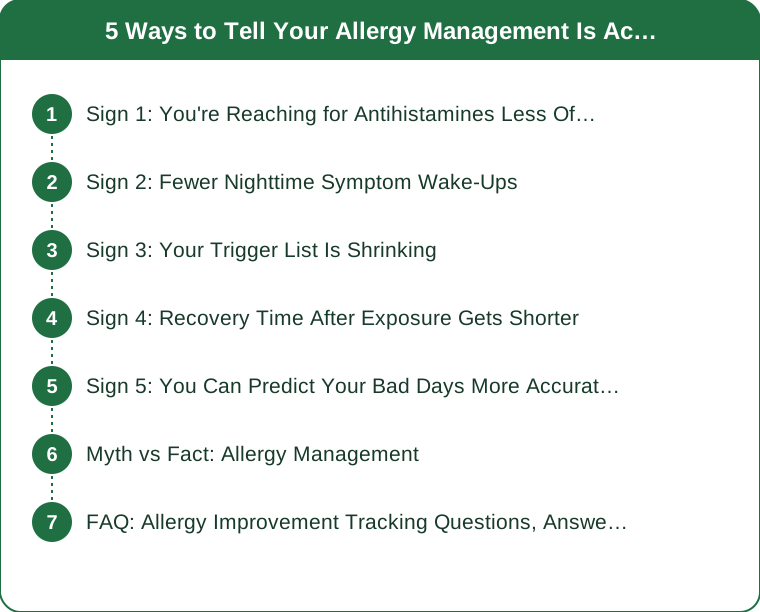
Sign 1: You’re Reaching for Antihistamines Less Often
Track this concretely: count how many days per week you needed rescue medication before your changes, and compare after 4-6 weeks. A drop from daily use to 2-3 times a week is a real, measurable signal, even if you still have some symptomatic days.
Sign 2: Fewer Nighttime Symptom Wake-Ups
Indoor allergen improvements (bedding, air filtration, dust control) show up first at night, since that’s when you’re most exposed to your bedroom’s specific allergen load for the longest stretch. If you’re no longer waking up congested or sneezing at 3am, your indoor changes are likely working, even before daytime symptoms fully catch up.
Sign 3: Your Trigger List Is Shrinking
Early on, maybe five different things set off symptoms — a particular room, a specific activity, certain weather. As management improves, fewer of these triggers actually produce a reaction, even when you’re still exposed to them, because your overall allergic threshold has dropped.

Sign 4: Recovery Time After Exposure Gets Shorter
If a bad pollen day used to mean 3 days of lingering symptoms and now it’s down to 1 day, that faster bounce-back is a real sign of improved management, even though the initial exposure symptom was identical. Track recovery time, not just whether symptoms happened.
Sign 5: You Can Predict Your Bad Days More Accurately
As you learn your specific patterns (certain pollen counts, specific foods, particular activities), your symptoms become more predictable rather than random — that predictability itself is a sign of better-understood, better-managed allergies, separate from symptom severity.
Myth vs Fact: Allergy Management
Myth: If you still have any symptoms, nothing is working. Fact: allergy management is almost always about reducing frequency and severity, not eliminating symptoms entirely — full elimination is rare without medical intervention like immunotherapy.
Myth: Local honey cures seasonal allergies. Fact: there’s no solid evidence local honey desensitizes you to the specific windborne pollens that cause most seasonal allergies — it may help with taste preference more than symptoms.
FAQ: Allergy Improvement Tracking Questions, Answered
How long should I try a change before judging if it’s working?
Give most interventions (bedding, air filtration, dietary changes) 4-6 weeks before evaluating, since allergen load and body response both take time to shift measurably.
Should I keep a symptom diary?
Yes — even a simple 1-10 daily rating with medication use noted catches trends that memory alone reliably misses.
When should allergy management move beyond home changes?
If rescue medication use isn’t dropping after 6-8 weeks of consistent changes, that’s a good point to discuss allergy testing or immunotherapy with an allergist.
TL;DR:
- Track rescue medication frequency before and after changes — a real drop is the clearest signal
- Nighttime symptom improvement usually shows up before daytime improvement
- Watch for a shrinking trigger list and faster recovery after exposure, not zero symptoms
- Give any single change 4-6 weeks before judging it
Allergy management rarely looks like symptoms disappearing overnight — it looks like a slow shrinking of frequency, severity, and recovery time. Track those specifically instead of just asking ‘do I feel cured yet.’
Keep Reading
This article is for general informational purposes only and is not medical advice. Always consult a qualified health professional for guidance specific to you.