Indoor Allergies: Winning the War Against Dust Mites and Friends
Quick Answer: Year-round symptoms that are worse in the morning and worse in bed usually point indoors, not to pollen. Start with the bedroom: allergen-proof encasements on mattress and pillows, weekly bedding washes at 60°C, humidity kept between 40-50%, and HEPA vacuuming. Encasements are the best-evidenced single step.
Your “seasonal” allergies have now been going for fourteen months.
You wake up congested, feel gradually better through the day, and — this is the tell — genuinely improve when you go outside. Which is the exact opposite of how hay fever is supposed to work.
The season might be your house. Dust mites, pet dander and indoor mold run year-round operations, and the bedroom is their headquarters.
What’s Actually Causing Year-Round Indoor Allergies?
Four main culprits, in rough order of how often they’re responsible.
Dust mites lead the field. Microscopic, bedding-dwelling, and feeding on the skin cells you shed constantly. It isn’t the mites themselves that trigger you — it’s their droppings, which become airborne when bedding is disturbed. A mattress can host millions of them, and they’ve been there longer than most of your furniture.
Pet dander follows. Sticky, lightweight and persistent — it stays airborne far longer than dust and clings to fabric and walls for months after a pet has gone. And the difficult part: “hypoallergenic breeds” are mostly marketing. All furred animals produce dander.
Indoor mold holds the damp corners — bathrooms, window condensation, under sinks, that one closet on the north wall that nobody talks about.
Cockroach allergen is a significant and under-recognized trigger in some buildings, particularly in dense urban housing.
The symptom signature is distinctive: worse in the morning, worse in bed, present all year, and better outdoors. If that’s your pattern, pollen isn’t the story.
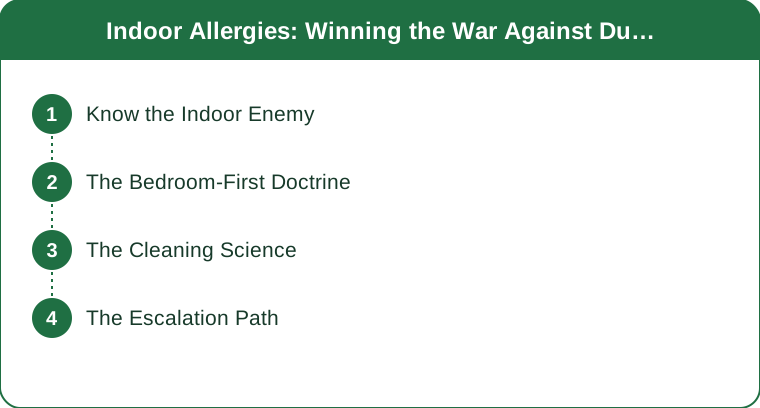
Why Does the Bedroom Come First?
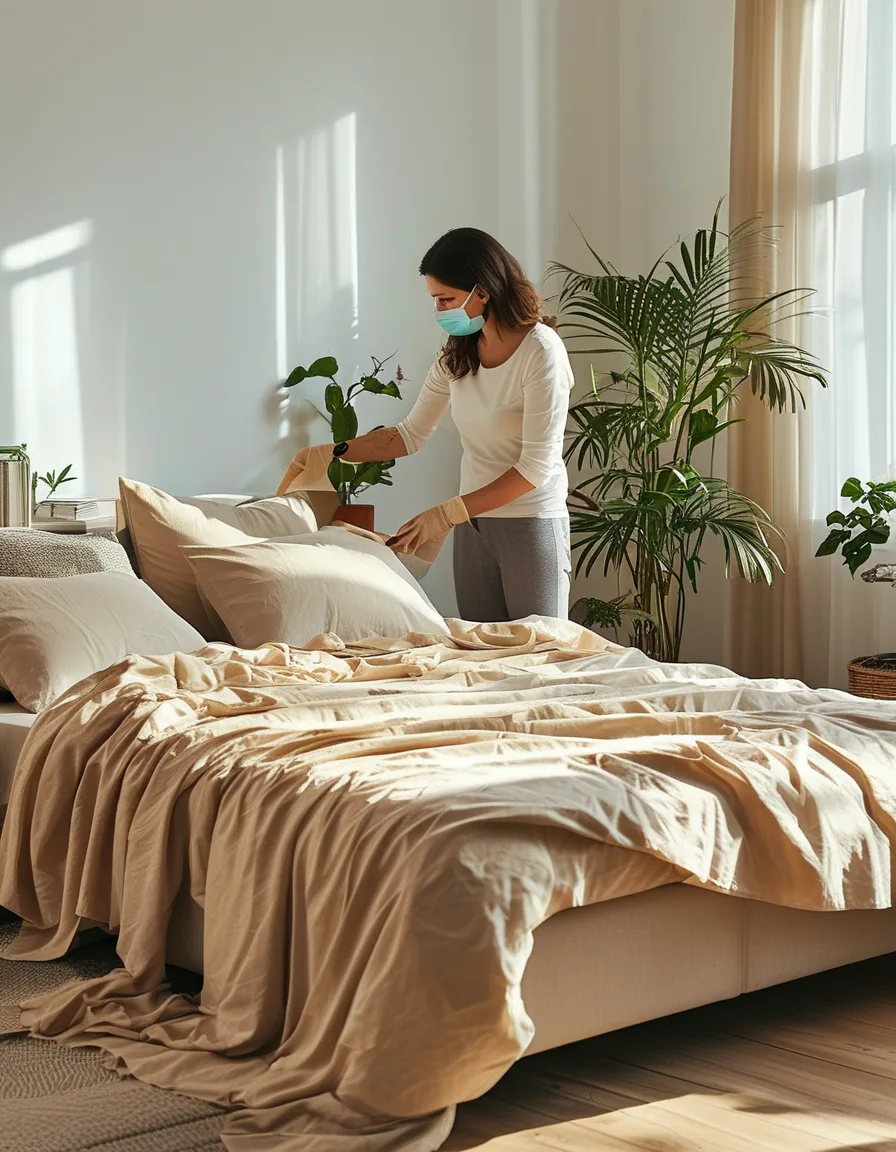
Because you spend roughly a third of your life there, face-down, in the middle of mite headquarters, breathing deeply for eight hours.
No other room comes close in exposure time. Fix this one and you’ve addressed most of your total load.
1. Encasements first — the single best-evidenced step. Allergen-proof covers for your mattress, pillows and duvet create a physical barrier between you and the mite population. Zip them up and the buffet closes. This is the highest-value purchase in this entire article.
2. Hot-wash bedding weekly at 60°C. Temperature matters — cooler “eco” washes don’t kill mites, they just give them a bath. If a fabric can’t handle 60°C, tumble drying on high heat afterward helps.
3. Retire the extras. Decorative cushions, layered throws, heavy floor-length drapes and soft toys on the bed are all mite habitat. The minimalist bedroom is a medical strategy, not an aesthetic preference.
4. Keep humidity between 40-50%. Mites thrive above 50%. A hygrometer costs about the same as a coffee and answers whether you need a dehumidifier.
5. The pets-off-the-bed conversation. This is the hardest sentence in this article and everyone knows it. Even partial enforcement — off the bed, out of the bedroom overnight — produces a real difference.

Myth vs Fact: The Cleaning Habits
Myth: More vacuuming always helps. Fact: A regular vacuum aerosolizes fine allergen particles it can’t contain, which can leave the air worse right after cleaning. A sealed HEPA system traps them instead. Vacuum weekly with HEPA, and do the mattress seasonally.
Myth: Dusting reduces allergens. Fact: Dry dusting is allergen redistribution theater — you’re moving it from a surface into the air. Damp-dust with a slightly wet cloth or a microfiber that actually holds particles.
Myth: Air fresheners make a room “cleaner.” Fact: Fragrance adds irritants and masks nothing relevant. Skip them entirely; several products marketed for allergy sufferers are actively counterproductive here.
Myth: An air purifier will fix it. Fact: HEPA purifiers have real but supporting evidence — most useful for airborne pet dander, less so for mites, which live in bedding rather than floating around. Size it to the room and run it in the bedroom. It’s a supplement to encasements, not a substitute.
Myth: Steam-cleaning carpets kills mites and solves the problem. Fact: If the carpet doesn’t dry fast, you’ve just created a mold buffet. Hard flooring beats carpet in a bedroom for allergen control, though a washable rug is a fine compromise.
Myth: Opening windows always improves indoor air. Fact: Helpful for humidity and mold, unhelpful during high pollen season if you’re also allergic outdoors. Time it — after rain, or in the evening.
What If Housekeeping Isn’t Enough?
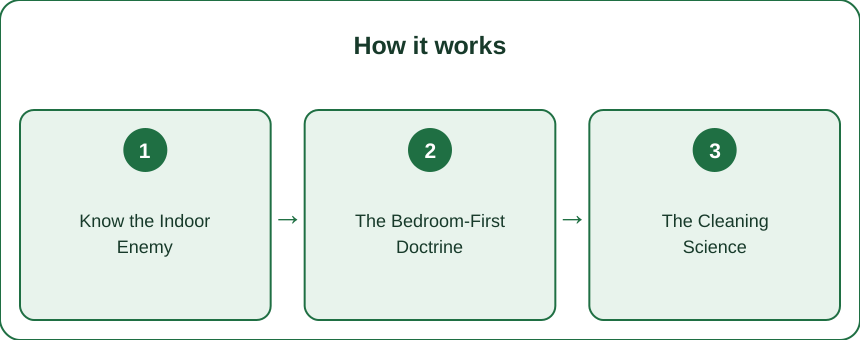
There’s an escalation path, and it’s worth following rather than resigning yourself to a permanently stuffy decade.
1. Keep a symptom diary for three to four weeks. Note where you were, what time of day, and how bad it was. Morning-at-home flares versus outdoor-exposure flares point at different enemies, and this alone often clarifies the picture.
2. Get allergy testing when management guesses stop working. Knowing it’s specifically mites rather than dander redirects your entire effort — and saves you from rehoming a cat that was never the problem.
3. Talk to a doctor about the medical tier. Modern treatment options are considerably better than they were, and allergen immunotherapy exists and works for many people with dust mite allergy. Years of stuffy resignation isn’t the only available plan.
One small practical note: your own clothes carry allergen too, particularly anything worn on a bed or a sofa. Clothes you can wash hot and often — a simple set of high waist leggings and a tee that go through a 60°C cycle without complaint — are quietly better bedroom-adjacent wear than delicate fabrics that only get cleaned occasionally.
When to see a professional: see a doctor if symptoms persist despite these measures, disturb your sleep, or aren’t controlled by over-the-counter treatment; if you have wheezing, chest tightness, coughing or shortness of breath, which can indicate asthma; or if you’re unsure whether your symptoms are allergic at all — chronic sinus problems and non-allergic rhinitis look similar and need different treatment. Get urgent help for significant breathing difficulty.
FAQ
How do I know if I’m allergic to dust mites?
The pattern is suggestive — year-round symptoms, worse in the morning and in bed, better when you’re away from home for a few days. Confirming it takes an allergy test, either a skin prick or a blood test, which a doctor or allergist can arrange. It’s worth confirming rather than guessing, since the management differs by trigger.
Do mattress encasements actually work?
Yes — they’re among the best-supported single interventions for dust mite allergy. They work by physically separating you from the allergen reservoir in the mattress. Look for products specifically labeled allergen-proof or mite-proof with a tight weave, and encase pillows and duvet too, not just the mattress.
What humidity level stops dust mites?
Keeping indoor relative humidity between 40% and 50% is the usual target, since mites struggle to thrive below about 50%. A cheap hygrometer tells you where you actually are, and a dehumidifier in damp rooms handles the rest — this also helps with mold, which likes the same conditions.
TL;DR
- Year-round, worse in bed, better outdoors = indoor allergen, not pollen.
- Bedroom first. You spend a third of your life in the mite headquarters.
- Encasements on mattress, pillows and duvet are the single best-evidenced step.
- Wash bedding weekly at 60°C — cooler washes don’t kill mites.
- Humidity 40-50%, HEPA vacuum weekly, damp-dust not dry. Skip air fresheners entirely.
- Symptom diary → allergy testing → medical options including immunotherapy. Don’t just resign yourself.
Keep Reading
This article is for general informational purposes only and is not medical advice. Always consult a qualified health professional for guidance specific to you.