Ragweed Weeks: 5 Small Moves That Change How August Into September Feels
Quick Answer: Ragweed season generally runs from mid-August through the first hard frost, with pollen counts peaking in the morning hours, commonly between about 6 and 10 am. The five highest-value moves are: shift outdoor activity to late afternoon, start antihistamines before symptoms rather than after, shower and change clothes after being outside, keep bedroom windows closed during peak weeks, and rinse the nose with saline daily. None of these are dramatic. Together they change the season noticeably.
It arrives right when the weather finally gets good. You assume it is a cold, then it lasts five weeks, and by the time you work out what it is you have already spent a month feeling terrible.

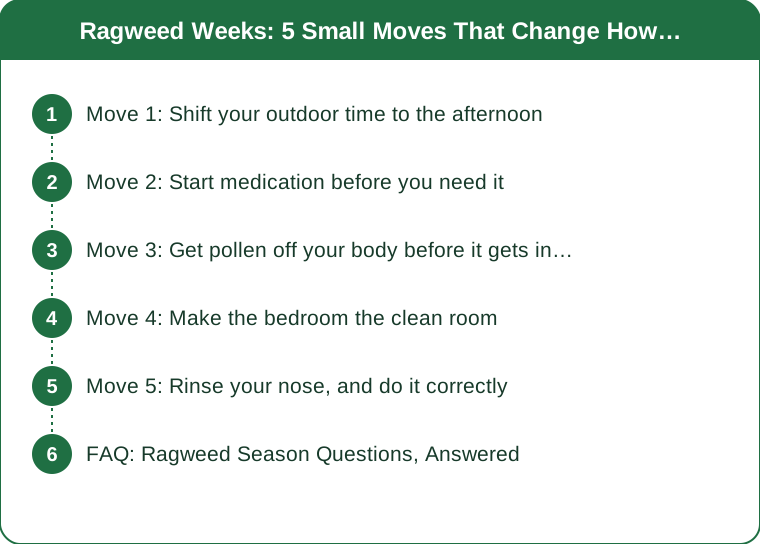
Move 1: Shift your outdoor time to the afternoon
Ragweed pollen release follows a daily rhythm. Plants generally release pollen in the morning, and counts commonly peak between roughly 6 and 10 am before declining through the afternoon. That single pattern means the same 45-minute walk can carry very different exposure depending only on when you take it.
Late afternoon and early evening are usually the better windows on dry days, when the morning release has dispersed and settled. This is the opposite of the standard fitness advice to train early, which is why so many people with fall allergies find their morning runs miserable and never connect the two.
Rain changes the picture in both directions. A steady rain washes pollen out of the air and provides genuine relief during and shortly after. But the hours after rain ends often bring a sharp rise as plants resume release into freshly humid air, so the post-rain window is not automatically safe.
Wind is the strongest single amplifier. Ragweed pollen is light and travels remarkably far - it has been detected hundreds of miles from its source. A dry, windy day is a high day regardless of what time you go out.
The practical version: check a pollen forecast the night before, plan the outdoor session for late afternoon on windy days, and treat calm days after rain as your best opportunities.
Move 2: Start medication before you need it
Antihistamines work considerably better as prevention than as rescue. They block histamine receptors, so taking them once the inflammatory cascade is already underway means playing catch-up against symptoms that are already established.
Start roughly one to two weeks before your usual onset. For most of the US that means starting in early to mid August for ragweed. If you know from previous years that late August is when it hits, the calendar is a better guide than your symptoms.
Second-generation antihistamines are the usual daily choice - cetirizine, loratadine, and fexofenadine - because they cause far less sedation than older options. Individual response varies enough that if one does not help, another may.
Intranasal corticosteroid sprays are the most effective single option for nasal symptoms according to allergy treatment guidelines, but they need consistent daily use and typically take several days to reach full effect. Used occasionally when symptoms flare, they underperform badly - which is why so many people conclude they do not work.
Technique matters for sprays. Aim slightly outward, toward the same-side ear, rather than straight up at the septum, and do not sniff hard afterward. Poor technique is a common reason for both irritation and disappointing results.
This is general information, not medical advice. Talk to a clinician or pharmacist about what is appropriate for you, particularly if you are pregnant, have other conditions, or take other medications.
Move 3: Get pollen off your body before it gets into your bedroom
Pollen sticks to hair, skin, and fabric, and it travels home with you. An hour outside during a high count means you are carrying a meaningful dose indoors on your clothes and hair, where it continues exposing you for the rest of the evening.
Shower and change after outdoor time, not just at the end of the day. Hair is the biggest carrier, and the single most useful version of this move is washing hair in the evening rather than the morning during peak weeks - otherwise you are sleeping with a day of pollen on your pillow.
Keep outdoor clothes out of the bedroom. Changing in a bathroom or hallway and putting worn clothes straight into a hamper elsewhere is a small logistical shift with a genuine payoff on symptoms overnight.
Do not dry laundry outside during ragweed weeks. Fabric hung outdoors becomes an efficient pollen collector, and sheets are the worst possible item to do this with. This is the one time of year when the dryer is the better choice.
Pets bring it in too. A dog that spends time outdoors during peak counts carries pollen in its coat directly onto furniture and beds. Wiping the coat down at the door helps more than it sounds like it should.

Move 4: Make the bedroom the clean room
You spend more consecutive hours in the bedroom than anywhere else, so it is the highest-leverage room in the house to control. Symptoms that are worst on waking usually trace back to overnight exposure rather than to anything about mornings themselves.
Keep windows closed during peak weeks, particularly overnight and in the early morning when release is highest. This is a genuine trade against pleasant September nights, and it is worth it for the weeks that matter most.
Use air conditioning or a filter rather than open windows for cooling. If you use a portable air cleaner, a HEPA unit sized for the room and left running is more effective than a larger unit run intermittently.
Wash bedding weekly in hot water during the season. Pillowcases matter most, since hair transfers directly onto them - and if you can only change one thing frequently, change that.
Vacuum with a HEPA-filter machine and let dust settle before you sleep. Vacuuming stirs particles into the air for a period afterward, so doing it in the morning rather than at bedtime avoids a self-inflicted exposure right before eight hours of breathing that room’s air.
Move 5: Rinse your nose, and do it correctly
Saline nasal irrigation physically removes pollen and mucus from the nasal passages, and it is supported as a useful adjunct in allergic rhinitis. It is inexpensive, has few side effects, and works alongside medication rather than instead of it.
Once daily during the season is a reasonable target, ideally in the evening after outdoor exposure so you are not carrying the day’s pollen into your sleep.
Use distilled, sterile, or previously boiled and cooled water - never straight tap water. This is the one genuinely important safety point: rare but serious infections have been linked to tap water use in nasal rinsing. Boiled and cooled water is fine; untreated tap water is not.
Clean the device after every use and let it air dry completely. A rinse bottle that stays damp is a poor thing to be irrigating your sinuses with.
Expect modest, cumulative relief rather than a dramatic change. It reduces congestion and post-nasal drip over days of consistent use, and it makes nasal sprays work better by clearing the surfaces they need to reach.
And know when to stop self-managing. Symptoms lasting beyond the first frost, wheezing or shortness of breath, facial pain and fever suggesting sinus infection, or symptoms that do not respond to over-the-counter treatment all warrant a medical visit. Allergy testing can also identify whether ragweed is actually your trigger, which is worth knowing before you rearrange another autumn around it.
This is general information, not medical advice.
FAQ: Ragweed Season Questions, Answered
When is ragweed season?
It typically begins in mid-August and continues until the first hard frost, which means it can run into October or November in warmer regions. Peak symptoms usually arrive in early to mid September for much of the US.
What time of day is ragweed pollen worst?
Counts generally peak in the morning, commonly between about 6 and 10 am, then decline through the afternoon. Late afternoon and early evening are usually better windows for outdoor exercise on dry days.
When should I start taking allergy medication for fall allergies?
One to two weeks before your symptoms usually begin - for most people that means early to mid August for ragweed. Antihistamines and especially intranasal steroid sprays work considerably better as prevention than as rescue after symptoms are established.
Does rain help with ragweed allergies?
During and shortly after a steady rain, yes - rain washes pollen out of the air. But counts often rise sharply in the hours after rain stops as plants resume release, so the post-rain period is not automatically a safe window.
Is it safe to rinse my nose with tap water?
No. Use distilled, sterile, or previously boiled and cooled water, since rare but serious infections have been linked to tap water in nasal rinsing. Clean and fully dry the device after every use.
TL;DR:
- Ragweed runs mid-August to first frost, with pollen peaking roughly 6 to 10 am - shift outdoor time to late afternoon.
- Start antihistamines and especially nasal steroid sprays one to two weeks before symptoms usually begin, not after.
- Shower and change after outdoor time, wash hair in the evening, and never dry laundry outside during peak weeks.
- Make the bedroom the clean room: windows closed, HEPA filtration, weekly hot-water bedding washes.
- Rinse with saline daily using distilled, sterile, or boiled and cooled water - never straight tap water.
- See a clinician for symptoms past the first frost, wheezing, facial pain with fever, or no response to over-the-counter treatment. This is general information, not medical advice.
Five small moves, none of them dramatic. Together they are the difference between enduring September and actually enjoying the best six weeks of the year.
Keep Reading
This article is for general informational purposes only and is not medical advice. Always consult a qualified health professional for guidance specific to you.