Outsmarting Seasonal Allergies: The Survival Guide
Quick Answer: The biggest improvement in allergy season comes from timing: start your usual management two weeks before your season typically begins, rather than after symptoms arrive. Then defend the bedroom — evening showers, closed windows on high-count days, and clothes changed after outdoor time. Pollen counts peak on dry, windy mornings and drop sharply after rain, so schedule outdoor exercise accordingly.
Seasonal allergies turn a chunk of the year into a subscription you never ordered. Same weeks, same misery, same surprise every single time.
But the gap between miserable and managed is mostly strategy, not luck. The pollen runs on a schedule, your home has a defense system you’re probably not using, and timing beats toughing it out by a wide margin.

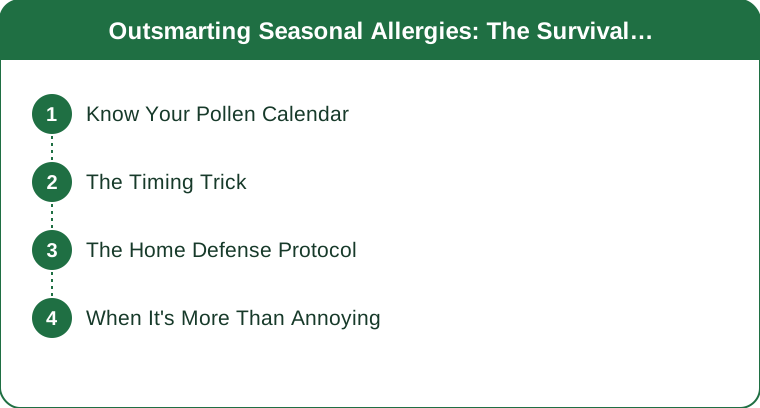
When Is Pollen Season, Exactly?
There isn’t one allergy season — there are three, and knowing which one is yours changes everything.
- Tree pollen — early spring, roughly March through May in most of the US. Oak, birch, cedar, maple.
- Grass pollen — late spring into summer, roughly May through July.
- Weed pollen — late summer into fall, roughly August through October. Ragweed is the headline act, and a single plant can release a billion pollen grains.
If you’re miserable in April and fine in September, you’re a tree person. Miserable in September and fine in April, you’re a ragweed person. Miserable from March to October, you may be reacting to more than one — which is exactly the case where testing pays off.
Within a day, counts follow a pattern too. Pollen is typically highest on dry, windy mornings, and falls sharply after rain washes it out of the air. That gives you a free scheduling lever: an evening run after rain is a dramatically different experience from a dry, breezy 7am one in peak season.
Free pollen forecast apps are genuinely useful here, and checking one takes ten seconds.
What’s the Timing Trick That Actually Works?
Start before you need to.
Most people wait until symptoms arrive, then begin managing. But allergic inflammation builds — once your airways and sinuses are already inflamed, you’re playing catch-up for weeks. Beginning your usual routine roughly two weeks before your season typically starts puts you in prevention mode rather than rescue mode.
You already have the data for this. Think back: what week did it hit last year? And the year before? That’s your start date, minus two weeks.
The specifics of what to take are a conversation with a pharmacist or doctor — options differ a lot by person and by symptom pattern. The timing principle is the part almost everyone learns too late.

How Do You Keep Pollen Out of Your House?
Your home should be the one place your immune system gets a break. Making that true takes four habits.
Change clothes after outdoor time. Pollen commutes home on fabric. Coming inside and sitting on the sofa in the same clothes relocates the entire outdoor exposure into your living room.
Shower in the evening, not the morning. Your hair holds a full day’s harvest, and a morning shower puts it on your pillow all night. This one change is the highest-value habit on the list for a lot of people.
Close windows on high-count days and let the AC filter. A fresh breeze in May is a pollen delivery system. Run air conditioning instead, and check whether your filter has been changed this year.
Prioritize the bedroom above all. You spend roughly a third of allergy season in that one room. A pollen-controlled bedroom is effectively an eight-hour nightly treatment — wash bedding weekly in hot water, keep the window shut in season, and keep outdoor clothes out of the room.
And the pets. Dogs and cats that go outside are adorable, highly mobile pollen brushes. A wipe-down with a damp cloth when they come in during peak weeks helps more than you’d expect.
Myth vs Fact: Seasonal Allergies
Myth: Local honey builds immunity to pollen. Fact: Charming idea, not supported. Bees collect flower pollen, which is heavy and insect-carried; your symptoms come from light, wind-carried tree, grass, and weed pollen that mostly isn’t in honey.
Myth: Rain makes allergies worse. Fact: Rain clears pollen from the air and usually brings relief. The exception is the period right after — plants can release heavily once things dry out, and thunderstorms can occasionally fragment pollen into smaller particles.
Myth: You can’t be allergic to something you’ve been fine with for years. Fact: Adult-onset allergies are common. Moving to a new region is a classic trigger, and so is simply getting older.
Myth: It’s allergies if it’s seasonal. Fact: Usually, but not always. Fever, body aches, or thick colored mucus point toward infection instead. Allergies bring itching — eyes, nose, throat — and colds generally don’t.
Myth: Allergy seasons aren’t really getting longer. Fact: They measurably are. Growing seasons in North America have lengthened and pollen production has increased over recent decades, so “it was never this bad before” is often accurate observation rather than imagination.
When Should You See a Doctor About Allergies?
The escalation line is functional, not symptomatic: if allergies are undermining your sleep, work, or exercise for weeks at a time, that’s worth professional attention rather than another season of enduring it.
Also see someone if over-the-counter management isn’t holding, if you’re getting wheezing or shortness of breath (allergies and asthma travel together), or if you’ve never been tested and have no idea what you actually react to. Testing identifies exact triggers, which turns generic advice into a specific plan — and longer-term treatment options exist that go well beyond the pharmacy aisle.
FAQ
Does exercising outdoors make allergies worse?
It can, because harder breathing pulls more pollen deeper into the airways. Shift outdoor sessions to evenings or to the day after rain during your peak weeks, and consider moving indoors on high-count, dry, windy days.
Do air purifiers help with seasonal allergies?
A HEPA purifier in the bedroom is one of the more useful single purchases, since that’s where you spend the most continuous time. It won’t fix a house with the windows open, though — the habits come first.
Why are my allergies worse this year than last?
Pollen counts vary substantially year to year with weather, and allergy seasons have been lengthening overall. New sensitivities can also develop in adulthood. If the jump is large, it’s worth getting tested rather than guessing.
TL;DR:
- Learn which season is yours — tree (spring), grass (summer), or weed (late summer/fall)
- Start management about two weeks before your season begins, not after symptoms hit
- Pollen peaks on dry, windy mornings; drops after rain — schedule outdoor time around it
- Defend the bedroom: evening showers, windows closed, bedding washed weekly
- Change clothes after outdoor time; wipe down outdoor pets in peak weeks
- Weeks of disrupted sleep, work, or exercise means it’s time to see a professional
Learn the calendar, start early, defend the bedroom. Allergy season has a schedule and a playbook — and outsmarting it beats out-suffering it every single spring.
Keep Reading
This article is for general informational purposes only and is not medical advice. Always consult a qualified health professional for guidance specific to you.