Does Local Honey Actually Help Seasonal Allergies? What the Evidence Says
The idea that a spoonful of local honey builds immunity to seasonal allergies has been repeated so often it feels like established fact — but the theory has a specific flaw that undercuts most of its promise. It is worth understanding why it sounds so convincing, what the actual evidence shows, and what genuinely helps instead. This is general information, not medical advice.

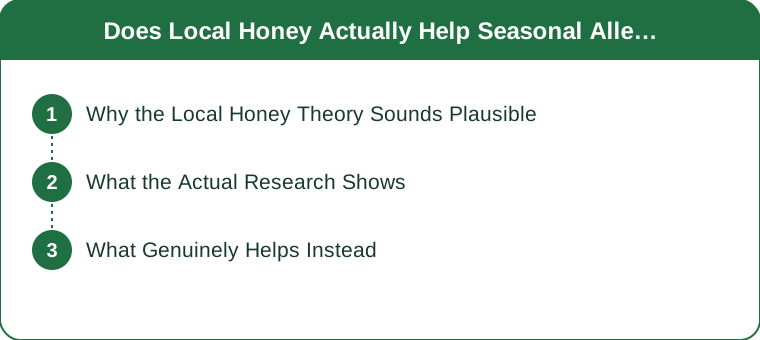
Why the Local Honey Theory Sounds Plausible
The appealing logic: the the-immunotherapy-parallel (the theory borrowing its logic from real allergy shots, which do expose the body to small allergen amounts over time — the it-mimics-a-real-treatment-in-concept), the the-local-specificity-appeal (the idea that local honey contains the exact regional pollen you react to feeling intuitively targeted — the sounds-personalized), the the-natural-remedy-appeal (the preference for a food-based fix over medication driving its popularity from the histamine-intolerance-guide logic — the natural-feels-safer), the the-anecdotal-reinforcement (the people who happen to feel better while taking it crediting the honey rather than coincidence or seasonal timing — the anecdote-is-not-evidence), the the-low-perceived-risk (the honey feeling harmless to try, lowering the bar for belief even without proof — the low-risk-invites-low-scrutiny), and the reframe (the theory’s appeal resting on a real mechanism — immunotherapy — applied to a substance that doesn’t actually deliver that mechanism reliably).

What the Actual Research Shows
The evidentiary gap: the the-pollen-mismatch-problem (the pollen that triggers seasonal allergies — wind-pollinated grass and tree pollen — being largely different from the flower pollen bees collect for honey — the wrong-pollen-entirely-often), the the-trace-amounts-problem (the any relevant pollen present in honey typically existing in amounts too small and inconsistent to build meaningful tolerance — the too-little-too-random), the the-controlled-studies-are-mixed-at-best (the the few controlled trials on honey and allergy symptoms showing weak or inconsistent results, not a clear allergy-fighting effect — the evidence-doesn’t-support-the-claim), the the-symptom-relief-isn’t-the-same-as-immunotherapy (the honey’s soothing effect on a scratchy throat being real but unrelated to actual allergen desensitization — the soothing-throat-not-curing-allergy), the the-real-immunotherapy-is-clinical (the actual allergen immunotherapy requiring precisely measured, medically administered doses — the real-version-looks-nothing-like-a-spoonful), and the frame (the research verdict as local honey lacking meaningful evidence for allergy desensitization, likely due to a pollen-type mismatch and inconsistent trace amounts — pleasant folklore, not a treatment).
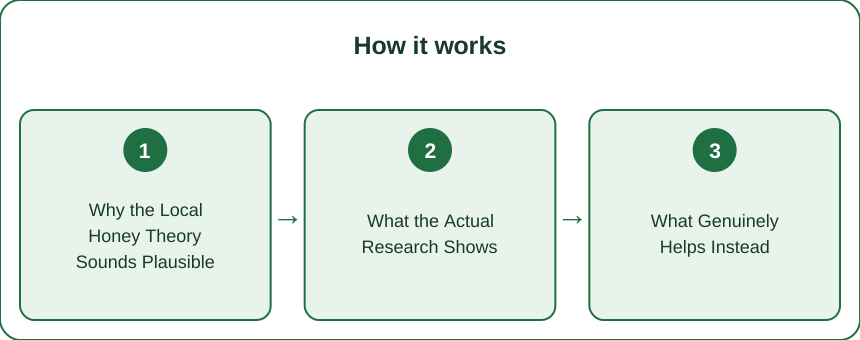
What Genuinely Helps Instead
The evidence-backed options: the the-antihistamines-and-nasal-sprays (the over-the-counter antihistamines and steroid nasal sprays having strong, consistent evidence for seasonal allergy symptom control — the the-actual-first-line), the the-real-immunotherapy-option (the physician-administered allergy shots or sublingual tablets being the closest legitimate parallel to the honey theory’s borrowed logic — the the-real-version-of-the-idea), the the-environmental-controls (the tracking pollen counts, keeping windows closed on high days, and rinsing off after outdoor time reducing exposure directly from the seasonal-allergy-survival-guide logic — the reduce-exposure-not-just-treat-symptoms), the the-nasal-rinsing (the saline nasal rinsing having solid evidence for reducing nasal allergy symptoms — the simple-and-well-supported), the the-talk-to-an-allergist (the an allergist identifying your specific triggers precisely rather than guessing from folklore — the precision-beats-guessing), and the frame (the genuinely helpful path as antihistamines or nasal sprays for symptoms, real immunotherapy for the underlying cause, and environmental controls to reduce exposure — actual evidence-backed tools, not a jar from the farmers market. This is general information, not medical advice.)
The local honey theory borrows its logic from real allergen immunotherapy, but falls apart on a key detail: honey contains flower pollen from bees, while seasonal allergies are mostly triggered by wind-pollinated grass and tree pollen that rarely ends up in honey in meaningful, consistent amounts — and the few controlled studies show weak results at best. What genuinely works is antihistamines or steroid nasal sprays for symptom control, saline nasal rinsing, environmental controls like tracking pollen counts and rinsing off after being outside, and real physician-administered immunotherapy for the underlying cause. Local honey is pleasant folklore with a soothing effect on a scratchy throat, not a desensitization treatment. This is general information, not medical advice.
Keep Reading
This article is for general informational purposes only and is not medical advice. Always consult a qualified health professional for guidance specific to you.